
CLIMATE HEALTH SOCIETYa global interdisciplinary professional society

Advancing Climate Health Globally

The Climate Health Society is a network connecting all professionals and sectors working at the intersection of climate and health.

From Evidence to Action: Building a Medical Movement on Plastics and Human Health
EventVirtual

From Evidence to Action: Building a Medical Movement on Plastics and Human Health

Sep 9 – Sep 9, 2026

12:00 PM EDT – 1:00 PM EDT

The evidence linking plastics and plastic-associated chemicals to human health has expanded dramatically over the past decade. Micro- and nanoplastics and thousands of plastic-associated chemicals are now detected throughout the environment and the human body, while research increasingly implicates these exposures in adverse reproductive, developmental, metabolic, cardiovascular, respiratory, and immune outcomes. Yet despite rapid scientific advances, many healthcare professionals remain unfamiliar with the evidence or uncertain about how to communicate it to patients, colleagues, policymakers, and the public. This presentation introduces the Physician and Scientist Network Addressing Plastics and Health (P-SNAP), a national network established to bridge this gap between scientific discovery and public health action. The session will describe P-SNAP's approach to translating emerging evidence into physician education, clinical communication, public engagement, policy advocacy, and interdisciplinary collaboration. Given its strong overlap in mission and goals with the Climate Health Society, P-SNAP can serve as a ready-made resource for professional development and communications training for CHS participants. Presentation attendees will learn how educational programming, expert working groups, medical society engagement, speaker development, and strategic partnerships are equipping physicians and scientists to serve as trusted voices on plastics and human health. The presentation will also explore the unique role of healthcare professionals in advancing upstream prevention by translating complex environmental health science into practical guidance and evidence-informed policy. By highlighting lessons from P-SNAP's first year of growth, the session will present a model for translating environmental health science into education, advocacy, and upstream prevention, demonstrating how coordinated medical leadership can strengthen public understanding and advance healthier policies.

We know the climate-health crisis is a challenge that no single profession can solve alone—but together, we can.

Welcome to the Climate Health Society

The Society

Will unite diverse professionals to address climate and health by building bridges across all sectors to advance the prevention and treatment of health risks from climate change, harmful environmental exposures, and ecological degradation while promoting strategies to enhance resilience and quality of life.

Through interdisciplinary collaboration we aim to be the professional home for all professionals working at the intersection of climate change and health.
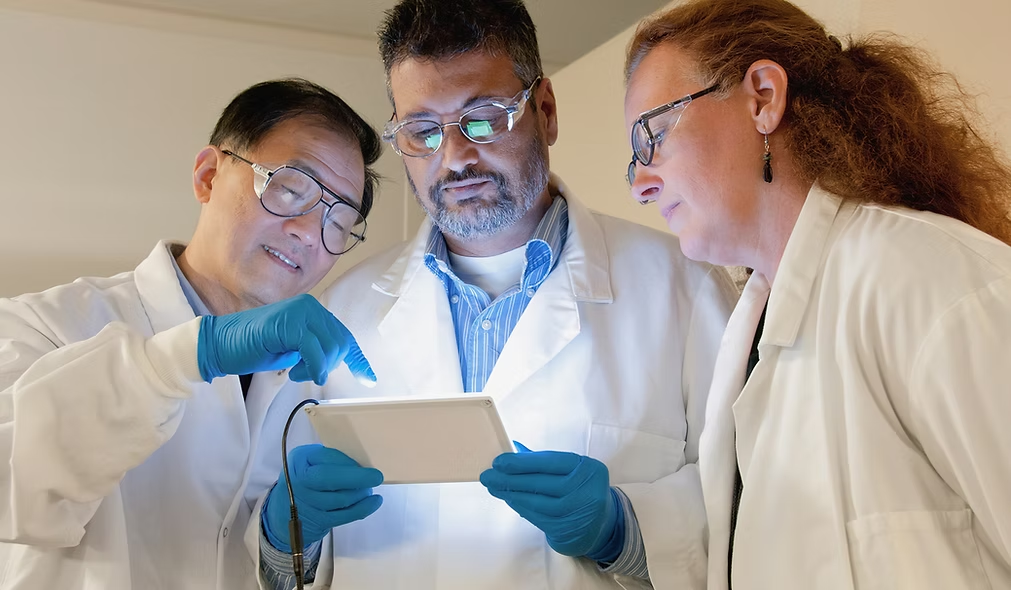
Climate health professionals
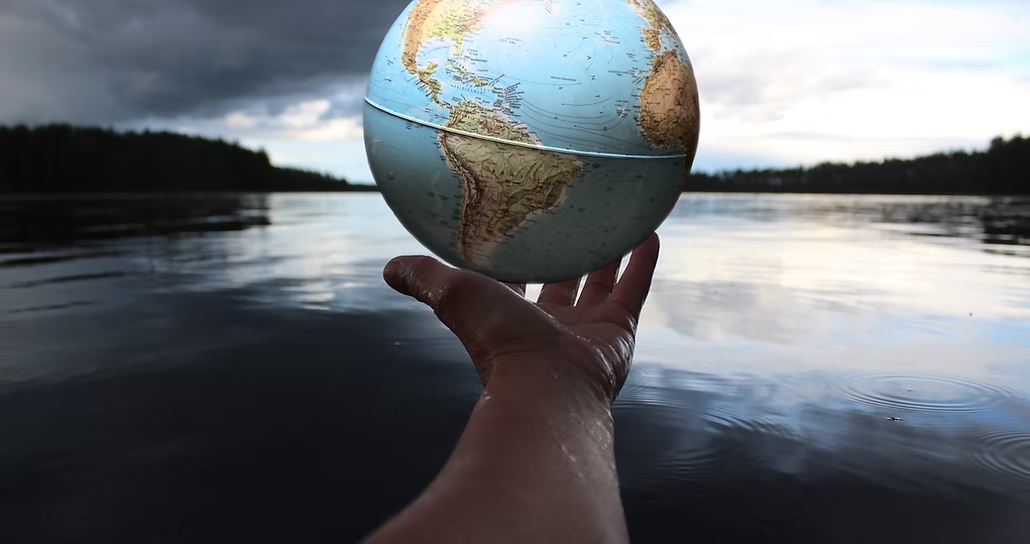
World in hand

The climate-health crisis is a challenge that no single profession can solve alone—but together, we can. By uniting medical professionals, climate scientists, sustainability experts, researchers, and many other interested professionals, we can unlock the full range of knowledge needed to create solutions that are evidence-based, clinically effective, economically viable, and scalable. Working across all sectors is our greatest strength.

Join us in building a dynamic community of professionals working to address the climate health crisis.

Upcoming Webinars

Join us at our next gathering — virtual or in person.

From Evidence to Action: Building a Medical Movement on Plastics and Human Health
Virtual

From Evidence to Action: Building a Medical Movement on Plastics and Human Health

September 9 – September 9, 2026

12:00 PM EDT1:00 PM EDT

The evidence linking plastics and plastic-associated chemicals to human health has expanded dramatically over the past decade. Micro- and nanoplastics and thousands of plastic-associated chemicals are now detected throughout the environment and the human body, while research increasingly implicates these exposures in adverse reproductive, developmental, metabolic, cardiovascular, respiratory, and immune outcomes. Yet despite rapid scientific advances, many healthcare professionals remain unfamiliar with the evidence or uncertain about how to communicate it to patients, colleagues, policymakers, and the public. This presentation introduces the Physician and Scientist Network Addressing Plastics and Health (P-SNAP), a national network established to bridge this gap between scientific discovery and public health action. The session will describe P-SNAP's approach to translating emerging evidence into physician education, clinical communication, public engagement, policy advocacy, and interdisciplinary collaboration. Given its strong overlap in mission and goals with the Climate Health Society, P-SNAP can serve as a ready-made resource for professional development and communications training for CHS participants. Presentation attendees will learn how educational programming, expert working groups, medical society engagement, speaker development, and strategic partnerships are equipping physicians and scientists to serve as trusted voices on plastics and human health. The presentation will also explore the unique role of healthcare professionals in advancing upstream prevention by translating complex environmental health science into practical guidance and evidence-informed policy. By highlighting lessons from P-SNAP's first year of growth, the session will present a model for translating environmental health science into education, advocacy, and upstream prevention, demonstrating how coordinated medical leadership can strengthen public understanding and advance healthier policies.

The Climate-Health Dividend: Climate is Raising the Stakes for Healthy Buildings
Virtual

The Climate-Health Dividend: Climate is Raising the Stakes for Healthy Buildings

Wednesday, September 16, 2026

1:00 PM EDT2:00 PM EDT

Climate change is fundamentally changing the role buildings play in protecting human health. Jason Hartke, PhD, EVP of Global Policy at the International WELL Building Institute (IWBI), will examine why healthier buildings are emerging as a critical climate resilience strategy and the opportunities to accelerate their adoption.

Strategic Networking for Career Advancement and Fullfillment
Virtual

Strategic Networking for Career Advancement and Fullfillment

October 6 – October 6, 2026

12:00 PM EDT1:00 PM EDT

Networking is often viewed as transactional or reserved for extroverts, yet meaningful professional relationships are among the strongest predictors of career success, leadership development, well-being, and belonging. This presentation reframes networking as the intentional cultivation of authentic, mutually beneficial relationships that foster personal and professional growth. Participants will explore the evidence supporting strategic networking, including the role of social connection in reducing isolation, enhancing resilience, and expanding opportunities. Drawing from leadership, organizational psychology, and social network research, the session will examine strong and weak ties, operational, personal, and strategic networks, and practical approaches to building diverse, equitable, and enduring professional relationships. Attendees will leave with actionable strategies to develop networks aligned with their values, goals, and career stage while fostering a greater sense of connection, purpose, and fulfillment.

Climate-Resilient Water Systems in NYC and Beyond
Virtual

Climate-Resilient Water Systems in NYC and Beyond

October 7 – October 7, 2026

12:00 PM EDT1:00 PM EDT

Water utilities are at the front lines of climate change, having to prepare for a range of impacts including drought, flooding, and pollution associated with runoff and aging infrastructure. These systems are typically not designed for the types of extremes that are being experienced today and projected to occur more frequently, so developing resilience requires understanding climate projections and anticipating conditions that have not been experienced in the past. To address these challenges, New York City has been advancing research and implementation on climate resilience for several decades and helped found the Water Utility Climate Alliance, a group of 14 utilities from a broad range of climate conditions across the United States. This presentation will focus on the often behind-the-scenes work to understand and protect drinking water, drainage, and wastewater systems from climate threats, highlighting tried and tested as well as emerging practices from NYC and other leading cities and water utilities.

Annual Virtual Global Meeting
Virtual

Annual Virtual Global Meeting

October 22 – October 22, 2026

6:00 AM EDT11:00 PM EDT

The climate-health crisis is a challenge that no single profession can solve alone—but together, we can.

Ready to Join?

Membership gives you access to the directory, forums, and a community of professionals shaping the future of climate health.